Key Lime Pie
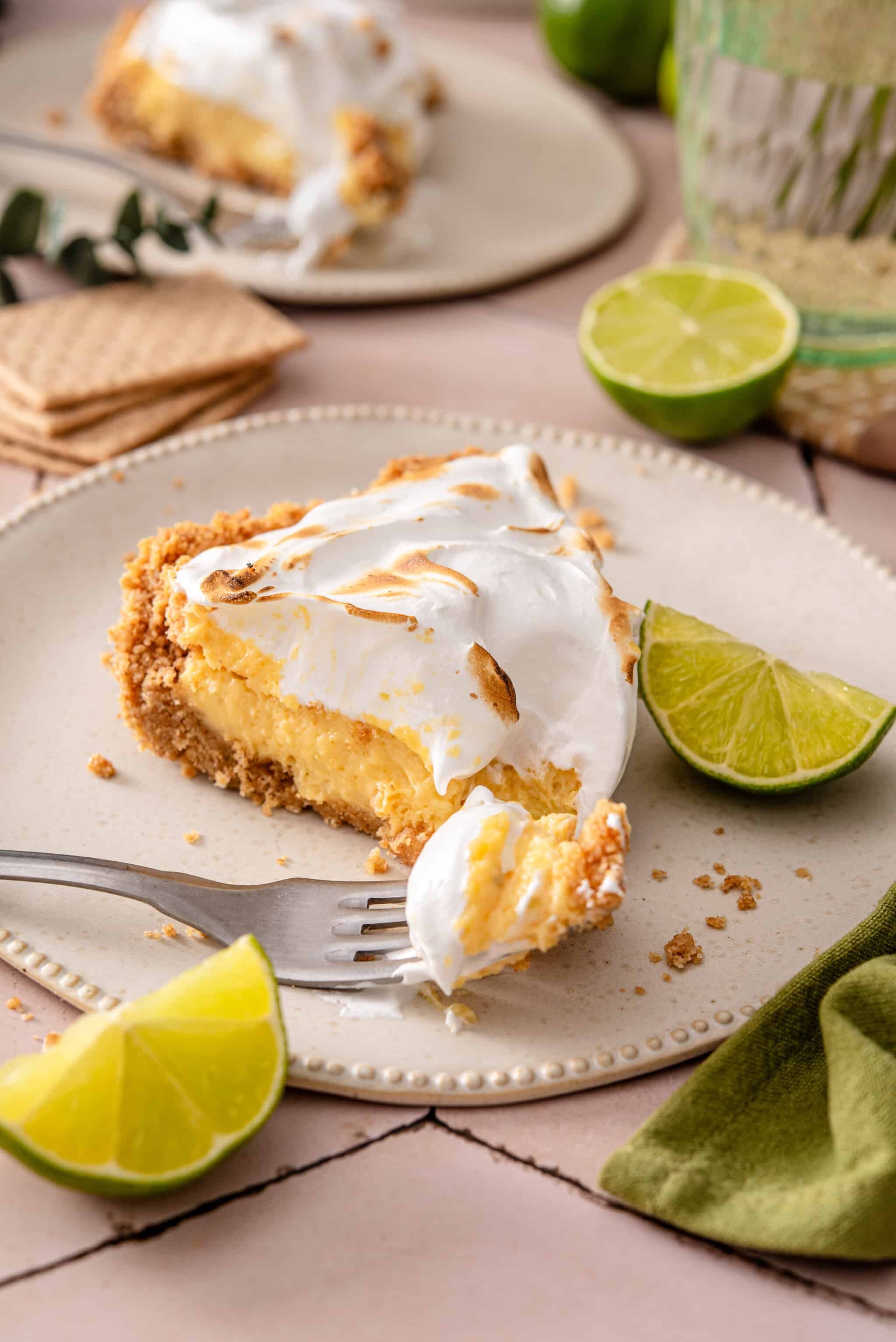
If there’s one dessert that belongs at every summer table, it’s this one. Tart, creamy key lime filling in a buttery graham cracker crust, topped with the softest, cloudiest Swiss meringue that holds its shape and toasts beautifully with a kitchen torch or a quick run under the broiler. It’s the kind of pie that looks like you really tried, even though the steps are more straightforward than people think.
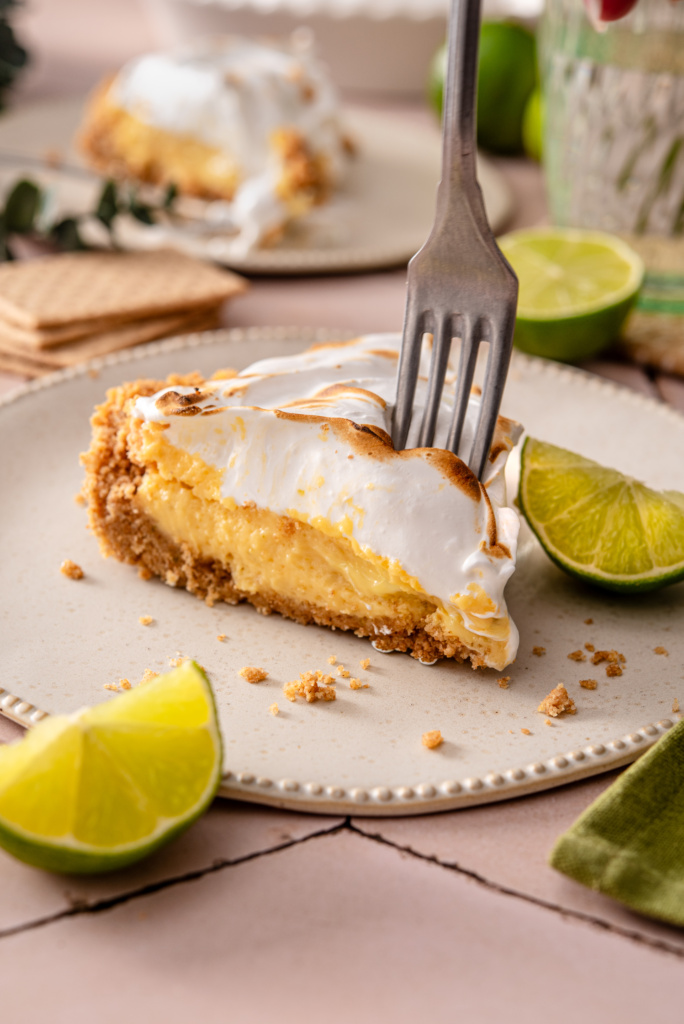
This version skips the whipped cream entirely. The Swiss meringue topping is lighter, more stable, and honestly more impressive. It floats like a marshmallow cloud and doesn’t deflate or weep the way regular whipped cream does after a few hours in the fridge. If you’ve been intimidated by meringue before, this post has you covered. By the time you’re done reading you’ll know exactly what to do and what to watch for.
Why This Key Lime Pie Works
Swiss meringue is the move for this pie specifically because it’s cooked before it goes on top. You heat the egg whites and sugar together over simmering water until they hit 160°F, which pasteurizes them and makes the topping completely safe to serve without baking. It whips up thick, glossy, and stable. It can sit in the fridge for a day and still look beautiful, which makes it perfect for making ahead. If you’ve ever had a key lime pie where the whipped cream topping slid off or turned watery, Swiss meringue fixes that entirely.
The filling itself is three ingredients plus zest, and the condensed milk does most of the work. Whisking the egg yolks and zest together first before adding the condensed milk and juice gives you a silkier, creamier texture than just combining everything at once. The five-minute rest before it goes into the crust is what thickens it so it sets cleanly and slices without collapsing.
Ingredients You’ll Need
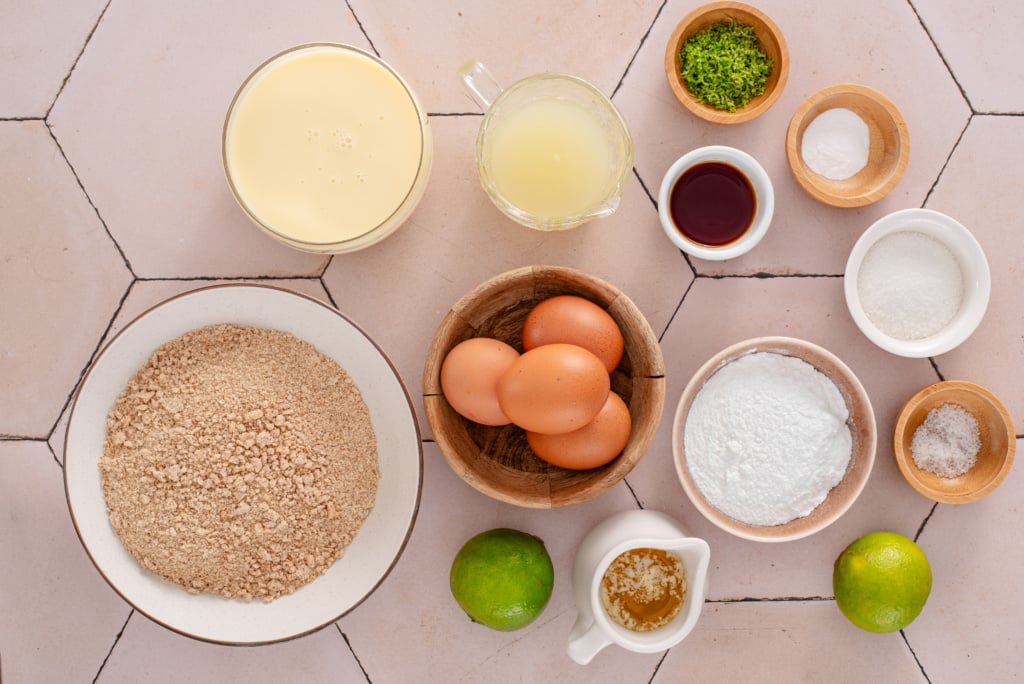
- Graham cracker crumbs: About 10 to 12 crackers crushed fine. The butter and sugar bind them into a crust that holds its shape and has a little crunch. Press it firmly into the dish because loose crust is the main reason slices fall apart.
- Unsalted butter: Melted and mixed into the crumbs. The pinch of sea salt in the crust balances the sweetness and complements the tartness of the filling.
- Egg yolks: Four of them, whisked with the lime zest first until pale. This step matters because it builds the base structure of the filling.
- Sweetened condensed milk: The backbone of the filling. It provides the richness, sweetness, and the thick texture that sets up properly when baked. Don’t sub regular milk here.
- Key lime juice: Fresh is ideal, but Nellie and Joe’s bottled key lime juice is a genuinely good substitute and what most people reach for outside of Florida. Half a cup gives you that sharp, floral tartness that makes key lime different from regular lime.
- Lime zest: Use a microplane and zest before you juice. This is where most of the floral, aromatic flavor comes from. Don’t skip it.
- Egg whites: Room temperature pasteurized egg whites for the meringue. Room temperature is important because cold egg whites take much longer to whip and don’t reach the same volume. If you want peace of mind when serving guests, pasteurized egg whites are the safest call, especially for kids or pregnant guests. And if you love citrus desserts, the key lime olive oil loaf uses a similar flavor profile in a totally different format.
- Powdered monkfruit sweetener: Swaps 1:1 for powdered sugar and works just as well in the meringue. Regular powdered sugar is a direct substitute if that’s what you have.
- Cream of tartar: Stabilizes the egg whites so the meringue holds its shape and doesn’t weep. Half a teaspoon of lemon juice or white vinegar works if you don’t have it.
How to Make Key Lime Pie with Swiss Meringue
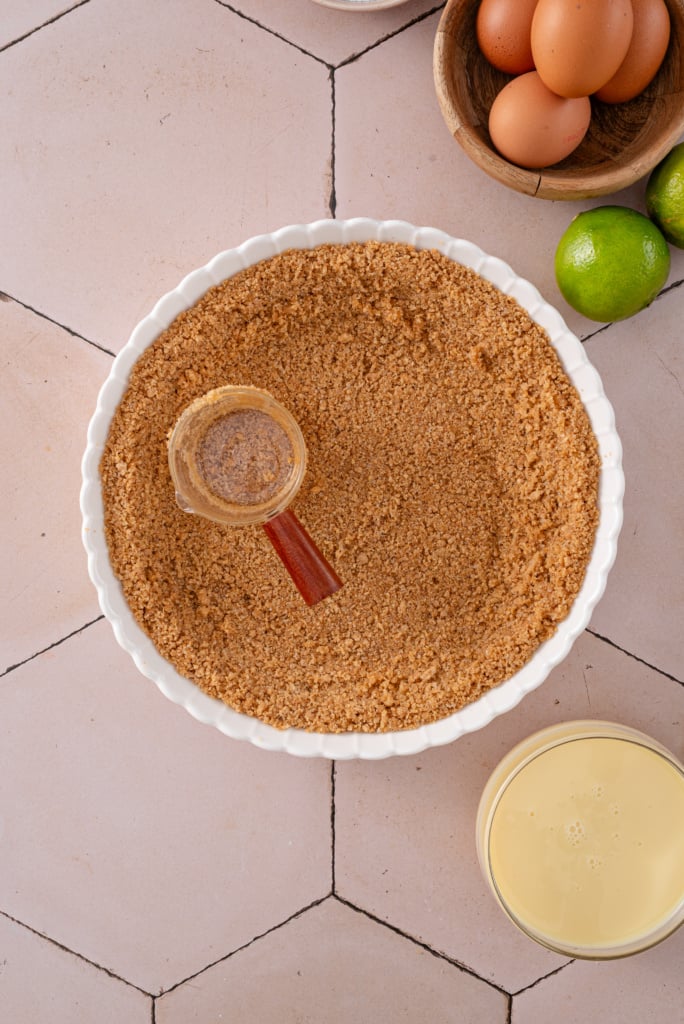
Step 1: Preheat your oven to 350°F. Mix graham cracker crumbs, sugar, salt, and melted butter until it looks like wet sand. Press firmly into the bottom and up the sides of a 9-inch pie dish. Bake for 8 to 10 minutes until lightly golden. Set aside to cool slightly.
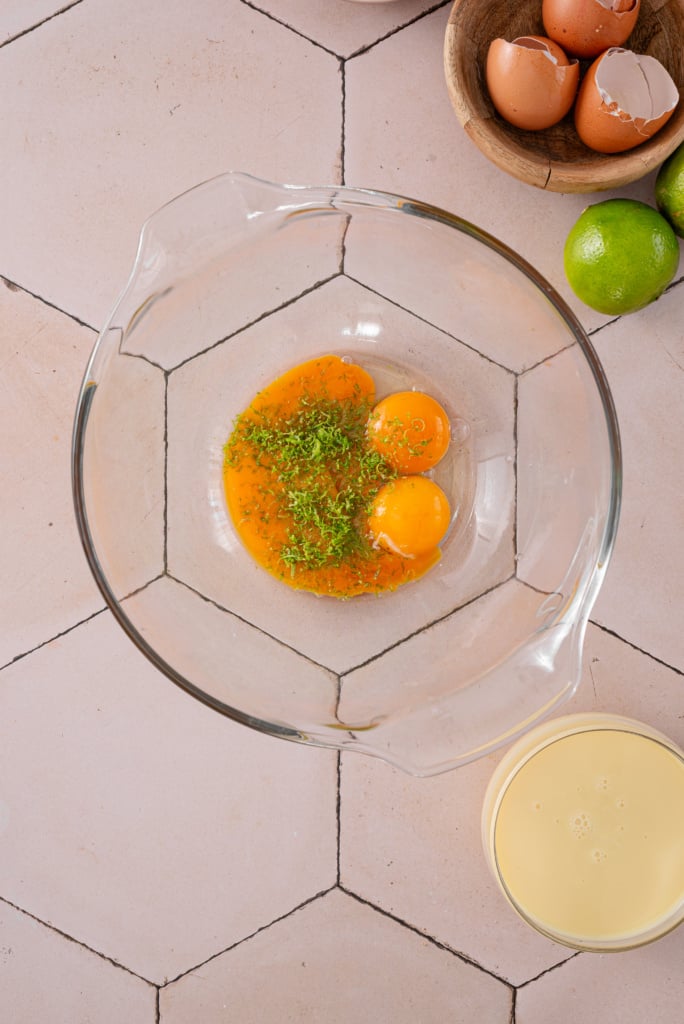
Step 2: Whisk the egg yolks and lime zest together for 1 to 2 minutes until the mixture looks pale and slightly creamy. Add the sweetened condensed milk and whisk until smooth. Stir in the lime juice and let the mixture sit for 5 minutes to thicken slightly.
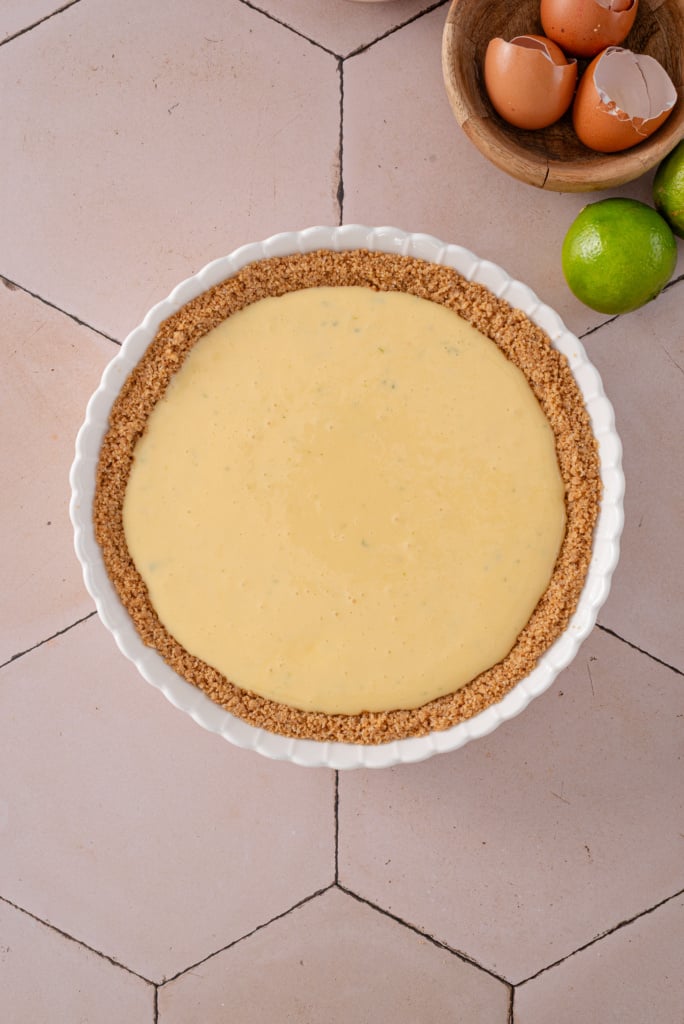
Step 3: Pour the filling into the baked crust. Bake at 350°F for 15 minutes until the edges are set and the center has just a slight wobble. Let it cool at room temperature for 30 minutes, then refrigerate for at least 4 hours or overnight.
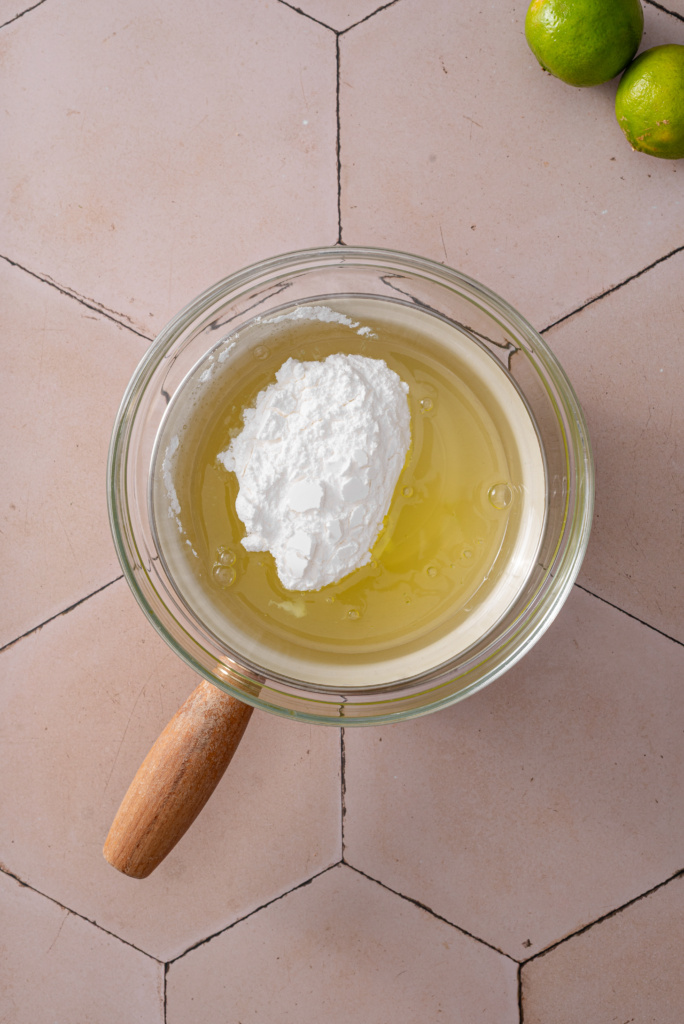
Step 4: When you’re ready to top the pie, set up a double boiler by placing a glass or metal bowl over a saucepan of simmering water, making sure the bowl doesn’t touch the water. Add the egg whites and powdered sweetener and whisk constantly until the mixture reaches 160°F on a thermometer. This takes about 3 to 5 minutes and the sugar should feel mostly dissolved when you rub a little between your fingers
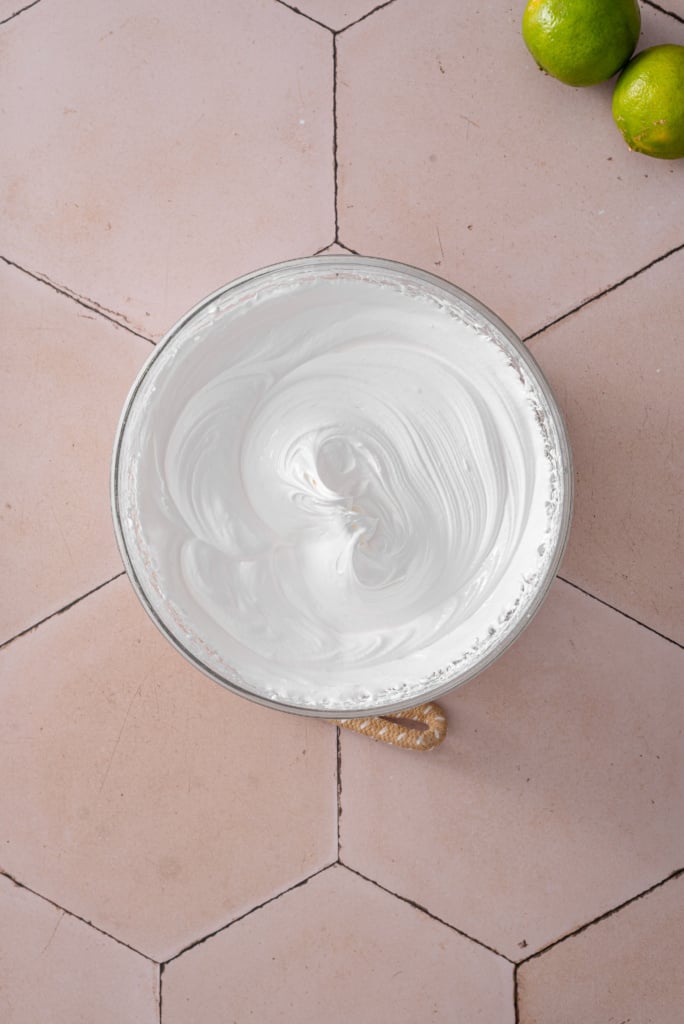
Step 5: Remove from heat. Add the cream of tartar and vanilla, then beat with an electric mixer on high for 5 to 8 minutes until the meringue is thick, glossy, and holds stiff peaks.
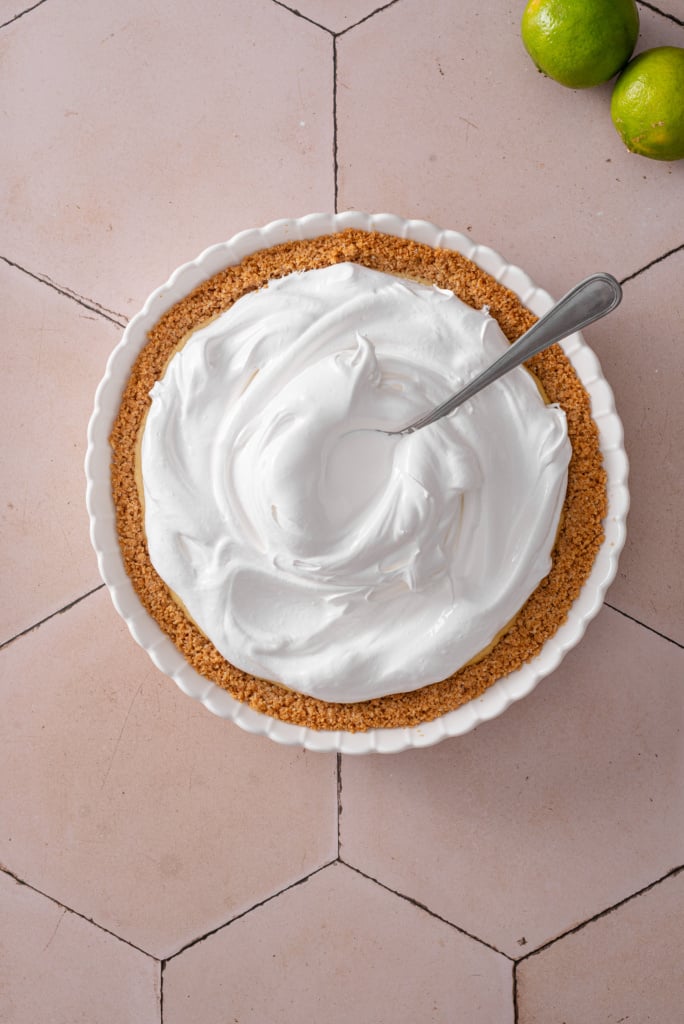
Step 6: Spoon, swoop, or pipe the meringue over the fully chilled pie. Toast the peaks with a kitchen torch or broil for 30 to 60 seconds, watching closely. Add lime zest on top before serving if you want that bakery finish. If you enjoy making impressive-looking desserts that aren’t as hard as they look, the raspberry almond morning rolls are in the same category.
Recipe Tips
- Use a thermometer for the meringue: 160°F is the target. Too low and the egg whites aren’t fully pasteurized. Too high and the mixture can start to cook unevenly. A cheap instant-read thermometer makes this completely foolproof.
- Clean equipment is non-negotiable: Any trace of grease or egg yolk in the bowl or on the whisk will stop the egg whites from whipping. Wipe everything down with a paper towel dipped in white vinegar before you start.
- Zest before you juice: Once you’ve cut and squeezed the limes, getting clean zest off the pith is much harder. Do it in order and use a microplane for the best result.
- Chill overnight if you can: The pie slices dramatically cleaner after a full overnight rest. The filling firms up completely and the meringue settles into itself. If you need to make it ahead, this is actually the better option.
- Use a hot knife for clean slices: Dip the knife in hot water and wipe it between each cut. This prevents the meringue from dragging and gives you those clean, photo-worthy slices.
- Rewhip the meringue if needed: If the meringue deflates slightly after sitting in the fridge, a quick 30 seconds with the electric mixer brings it right back.
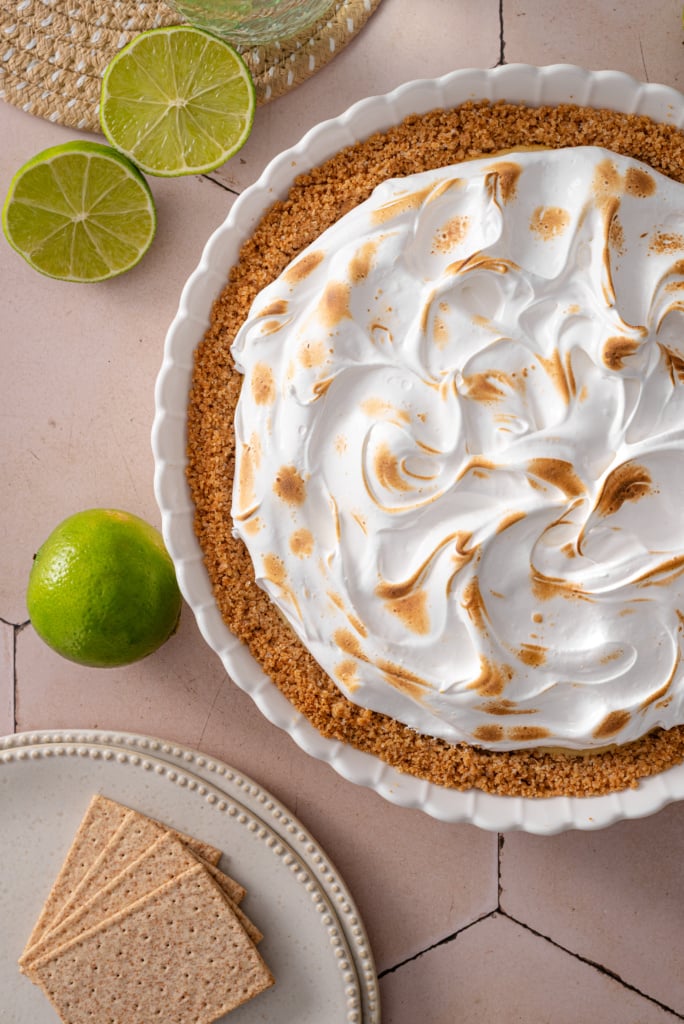
How to Serve Key Lime Pie
This pie is a full dessert on its own and doesn’t need much alongside it. A few thin slices of lime on top or a little extra zest scattered over the toasted meringue is all the garnish it needs.
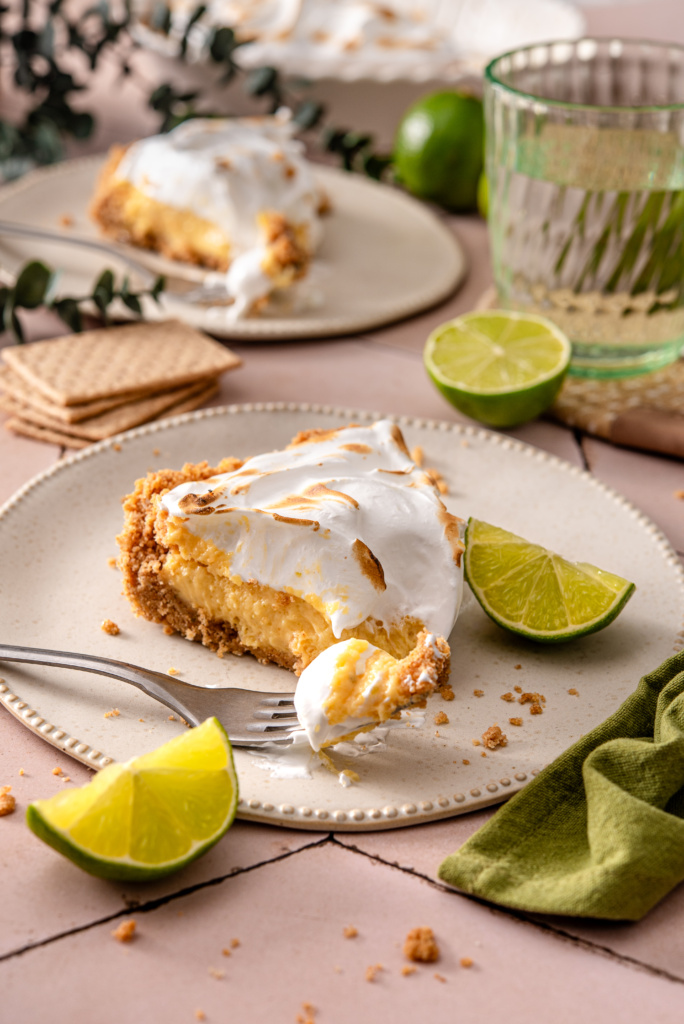
Serve it cold straight from the fridge. The filling is meant to be firm and cool, and the contrast between the cold tart filling and the soft toasted meringue on top is the whole point. If you’re serving it at a gathering, pull it out right before you’re ready to slice it.
For something to serve alongside it, a small scoop of vanilla ice cream or fresh berries works really well. The berry tartness plays off the lime without competing with it. If you’re building out a full summer dessert spread, the strawberry cheesecake clusters are an easy no-bake add that rounds out the table without more oven time.
Storage and Make-Ahead
Fridge: Store the finished pie loosely covered for up to 3 days. A domed container or loosely tented plastic wrap protects the meringue peaks without flattening them.
Freezer: Freeze the baked crust and filling without the meringue topping. Wrap tightly in plastic wrap and then foil. Freeze for up to 2 months. Thaw overnight in the fridge, then make the Swiss meringue fresh and top right before serving.
Make ahead: Bake the crust and filling a day ahead and refrigerate overnight. Make the Swiss meringue and top the pie right before you serve it for the best height and texture. This is the easiest way to handle it for a party because all the baking is done the day before and you spend five minutes on the meringue when you’re ready.
Frequently Asked Questions
Regular meringue is made by whipping raw egg whites with sugar and piping it on top. Swiss meringue heats the egg whites and sugar together first before whipping, which pasteurizes the eggs and creates a more stable, glossier result that holds up much better in the fridge.
Yes. Regular Persian limes give you a slightly less floral flavor but the pie is still really good. A mix of regular lime and a little lemon juice gets you closer to the key lime flavor if you want to experiment.
Usually the egg whites were beaten too long after hitting stiff peaks, or the pie wasn’t fully chilled before you added the topping. Make sure the filling is completely cold and stop beating the meringue as soon as it holds stiff peaks.
No, but it does make it look significantly better and adds a slightly toasted flavor that plays really well against the tart filling. A quick run under the broiler at 30 to 60 seconds is an easy substitute if you don’t have a torch.
More Summer Desserts
Did you love this recipe? Please leave a star rating and comment below! For more recipe inspiration,
Tag @wholesomelymorgan on Instagram! #wholesomelymorgan
Key Lime Pie
Ingredients
For the Graham Cracker Crust:
- 1 ½ cups graham cracker crumbs about 10–12 crackers
- 6 tbsp unsalted butter melted
- 2 tbsp sugar
- Pinch of sea salt
For the Key Lime Filling:
- 4 egg yolks
- Zest of 2 key limes or regular limes
- 14 oz sweetened condensed milk
- ½ cup key lime juice fresh or bottled, like Nellie & Joe’s
For the Swiss Meringue Topping:
- 4 egg whites pasteurized, room temperature
- ½ cup powdered monkfruit sweetener or powdered sugar
- ½ tsp cream of tartar
- 1 tsp vanilla extract optional
Instructions
Enable step-by-step mode- Preheat oven to 350°F (175°C). In a bowl, mix graham cracker crumbs, sugar, salt, and melted butter until the texture resembles wet sand. Press the mixture firmly into the bottom and sides of a 9-inch pie dish. Bake for 8–10 minutes until lightly golden. Let cool slightly.
- In a mixing bowl, whisk the egg yolks and lime zest for 1–2 minutes until pale and creamy. Add the sweetened condensed milk and whisk until smooth. Stir in the lime juice and let the mixture sit for 5 minutes to thicken slightly.
- Pour the filling into the baked crust. Bake at 350°F for 15 minutes until the edges are set and the center has just a slight wobble. Let the pie cool at room temperature for 30 minutes, then refrigerate for at least 4 hours or overnight.
- In a clean glass or metal bowl, whisk together the egg whites and powdered monkfruit sweetener (or sugar). Set the bowl over a saucepan of simmering water, making sure the bottom of the bowl doesn’t touch the water.
- Whisk constantly until the mixture reaches 160°F on a thermometer (this takes about 3–5 minutes). It should feel warm and the sugar should be mostly dissolved.
- Remove from heat. Add the cream of tartar and vanilla extract, then beat with an electric mixer on high speed for 5–8 minutes, until the meringue is thick, glossy, and holds stiff peaks.
- Once the pie is fully chilled, top with the Swiss meringue. Spoon, swoop, or pipe as desired. For a classic finish, lightly toast the peaks with a kitchen torch just before serving.